
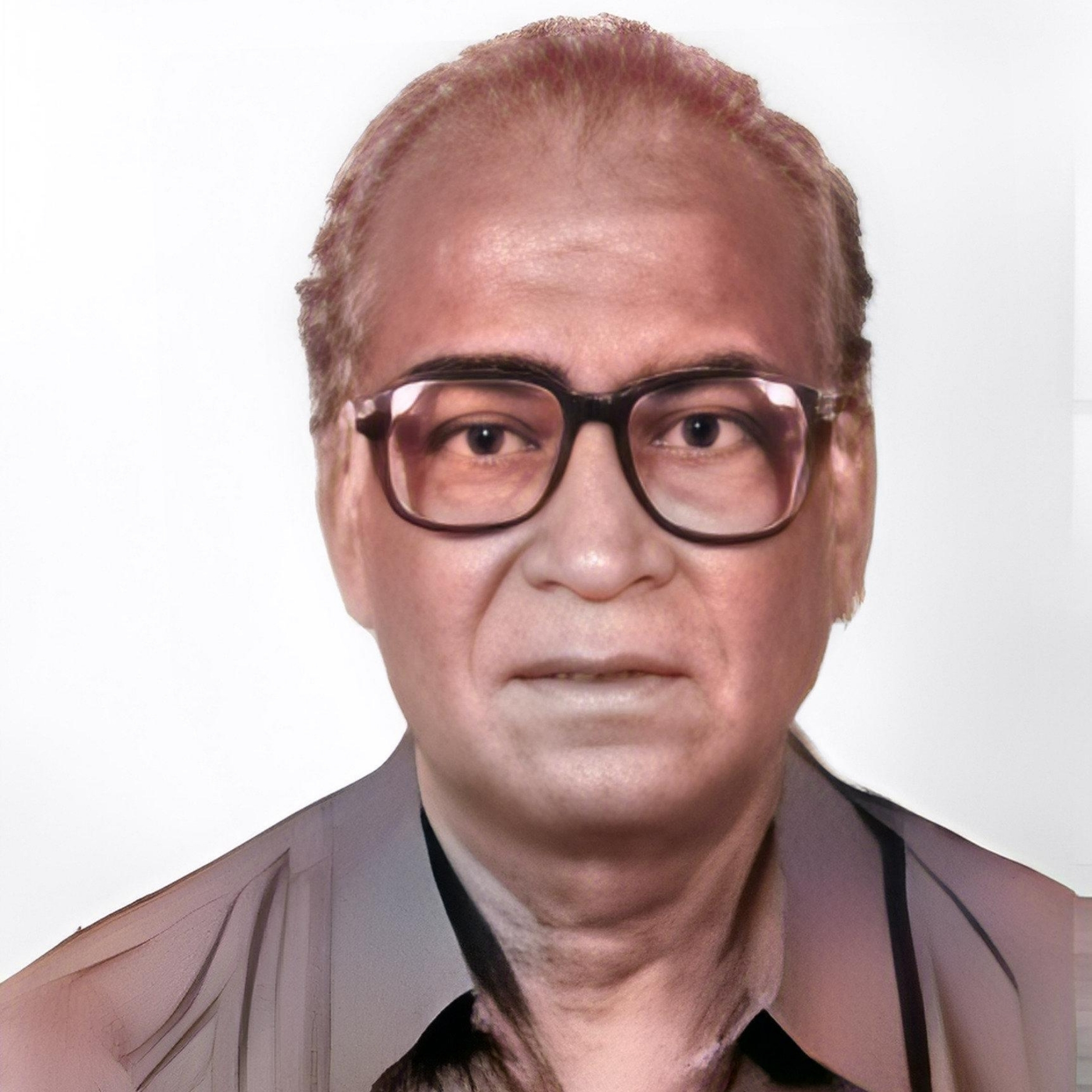
Krishin Sunderdas Vachhani
Krishin Sunderdas Vachhani, popularly known by his pen name Rahi, was born on 25 May 1932 in Larkana, Sind [Pakistan]. A B.A. graduate, he later settled in Thane and served as a government official at the Bhabha Atomic Research Centre, Mumbai, before retiring.
With over five decades of contribution to Sindhi poetry, literary criticism, and short story writing, Rahi is widely recognized as a prominent literary figure. His poetry is rich in the lyrical essence of Sindhi folklore, while also reflecting progressive thought. A balanced blend of tradition and modernity defines his work, and he is respected as a constructive critic, editor of several literary magazines, and an articulate debater.
Key Facts
- Birth Date: 25.5.1932
- Place of Birth: Larkana, Sind (Pakistan)
- Academic Attainments: B.A.
- Permanent Address: Thane (W), Maharashtra, India.
- Occupation: Retd. Govt. Official,
Bhabha Atomic Research Centre,
Mumbai
Significant Literary Achievements / Contributions
- Lurk Ain Murk, [Tears & Smile], Short stories, 1956.
- Kumach, [A bow of a fiddle], Poems, 1969.
- Vasan Sanda Ves, [Sight of Rainfall], Poems 1987.
Rahi is both poet and literary critic.
Recognition By Way Of Awards / Honours
- Award for his book Kumach, 1971 [At New Delhi by Sahitya Akademi, Ministry of HRD, Govt. of India].
- Award for his book Vasan Sanda Ves, 1989 [At Mumbai by Maharashtra State Sindhi Sahitya Academy].
- Gaurav Puraskar for significant literary contributions, 1990 [At Mumbai by Govt. of Maharashtra].
- Life time Achievement in literature award, 2001 from maharashtra state sindhi sahitya Academy.
Additional Information
- Rahi has 50 years contribution in Sindhi poetry, literary criticism and short story writing. He edited several magazines and periodicals also. He has been associated with number of literary organizations.
- His poetry is endowed with lyrical quality of Sindhi folklore.
Finale
Rahi is recognised as a prominent poet and a literary critic by Sindhi community. He is influenced by the traditional poetry and is also conversant with the progressive poetry of the day. He does beautiful bending of both traditional and new progressive poetry. He is a constructive and positive critic and is also an eloquent debator.