Sundri Lifetime Sindhyat Award
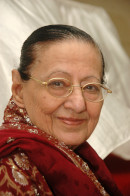
About Sundri Uttamchandani
(28 September 1924 to 8 July 2013)
Sundri Uttamchandani was a towering figure of post-Independence Sindhi literature-an eminent poet, novelist, short story writer, playwright, essayist, and translator-who believed that "the creative process is the recreation of reality". Born in Hyderabad, Sindh, and nurtured on folk and mythological traditions, she began her literary career in college and rose to prominence with her path-breaking novel Kirandar Deewroon (1953), which broke male dominance in Sindhi fiction through its homely, idiomatic language and mature social vision. Her novels, short stories, poetry, and translations-marked by deep humanism, sensitivity to women’s lives, and artistic imagination-earned her national recognition, multiple awards including the Sahitya Akademi Award (1986), and a lasting legacy as an inspiration to generations of writers, especially women.
Key Facts
- Birth Date: 28 September 1924
- Place: Hyderabad, Sindh (now in Pakistan)
Biography
Sundri Uttamchandani, born on 28 September 1924 in Hyderabad, Sindh, emerged as a leading figure of post-Independence Sindhi literature. Raised on folk and mythological traditions narrated by her parents, she was influenced early by the freedom movement. She began her literary career during her college years and married Assandas Uttamchandani (A. J. Uttam) in 1947. Exposure to progressive literary circles in Mumbai shaped her creative journey. Her debut novel Kirandar Deewroon (1953) proved path-breaking, breaking male dominance in Sindhi fiction and earning national recognition. Her career spans over six decades, inspiring generations of writers, especially women.
Occupation
Poet, novelist, short story writer, playwright, essayist, and translator.
Books Published
- Kirandar Deewarun, 1953 (5 editions and translated in 3 languages)
- Preet Purani Reet Niralee, 1956 (5 editions)
- Eight collections of short stories
- Four poetry collections
- Vichhoro, 1989 (2 editions)
- Naien Sabhitya Jo darshan, 1975
- Bharat Roos Ba Banh Beli (India–Russia: Two Comrades in Arms)
- Hik Sassui Sao Soor (Trans), 1963
- Achaa Vaar Gaara Gul, 1965
- Aman Sade Peyo, 1966
- To Jin Jee Taat, 1970
- Boori, 1979 (3 editions)
- Bandhan, 1985 (3 editions)
- Yugaantar, 1989
- Kheryal dharti, 1992
- Murk Te Manah, 1992
- Hugao, 1993
- Atam Vishwas, 1999
- Sindhu(Dramas), 2000
- Nakhreliyun, 2001
- Daath Bani Aa Laat, 2004
Awards / Honours
- Sahitya Akademi Award (1986) for Vichhoro
- Soviet Land Nehru Award for writings on the Soviet Union
- First Prize for short story Kheer Bariya Hathra (Kahani journal, early 1960s)
Telefilms in Sindhi
- Vilayati Ghot Ji Golha, 2006
- Boori, 2008
- Kitty Party, 2008
Telefilms in Hindi
- Bandhan, 1986
Besides
Inspirer and mentor to generations of women writers; widely admired for portraying real-life characters with artistic imagination.
Translation
Translated novels, short stories, and poems of renowned writers including Amrita Pritam, Maxim Gorky, Krishna Chandra, and Sholokhov.
Literary Activities
- Active participant in Progressive Writers’ Movement
- Regular attendee of literary meetings with eminent Sindhi writers
- Contributor to fiction, poetry, essays, drama, and literary criticism
- Experimented with free verse and traditional metrical poetry
Chronology
- 1924: Born in Hyderabad, Sindh (Pakistan)
- 1946: Started her writing career
- 1947: Her marraige with Assandas Uttamchandani
Her first novel - Kirandar Deewroon published - 1956: Her second novel Purani acet nirali, published
- 1966 & 1979: Soviet land Nehru Award
- 1986: Sahitya Akademi Award for Vichhon
- 1990: Gaurav puraskar & Founded Sindhi Sahitya Mandal